The School of Life Sciences at Nankai University is enough to buy MicroInstrument OptoelectronicsResearch-grade trinocular inverted fluorescence microscopeWYS-41XDY, used for fluorescence observation of cells stained by fluorescence. Our companyResearch-grade trinocular inverted fluorescence microscopeWYS-41XDYFeatures:
1. Reasonable improvements based on research-grade microscopes make them more suitable for laboratories.
2. Cell observation: a new VIS optical system with excellent optical performance and clear images; The contrast effect is excellent, comparable to products from world-renowned brands.
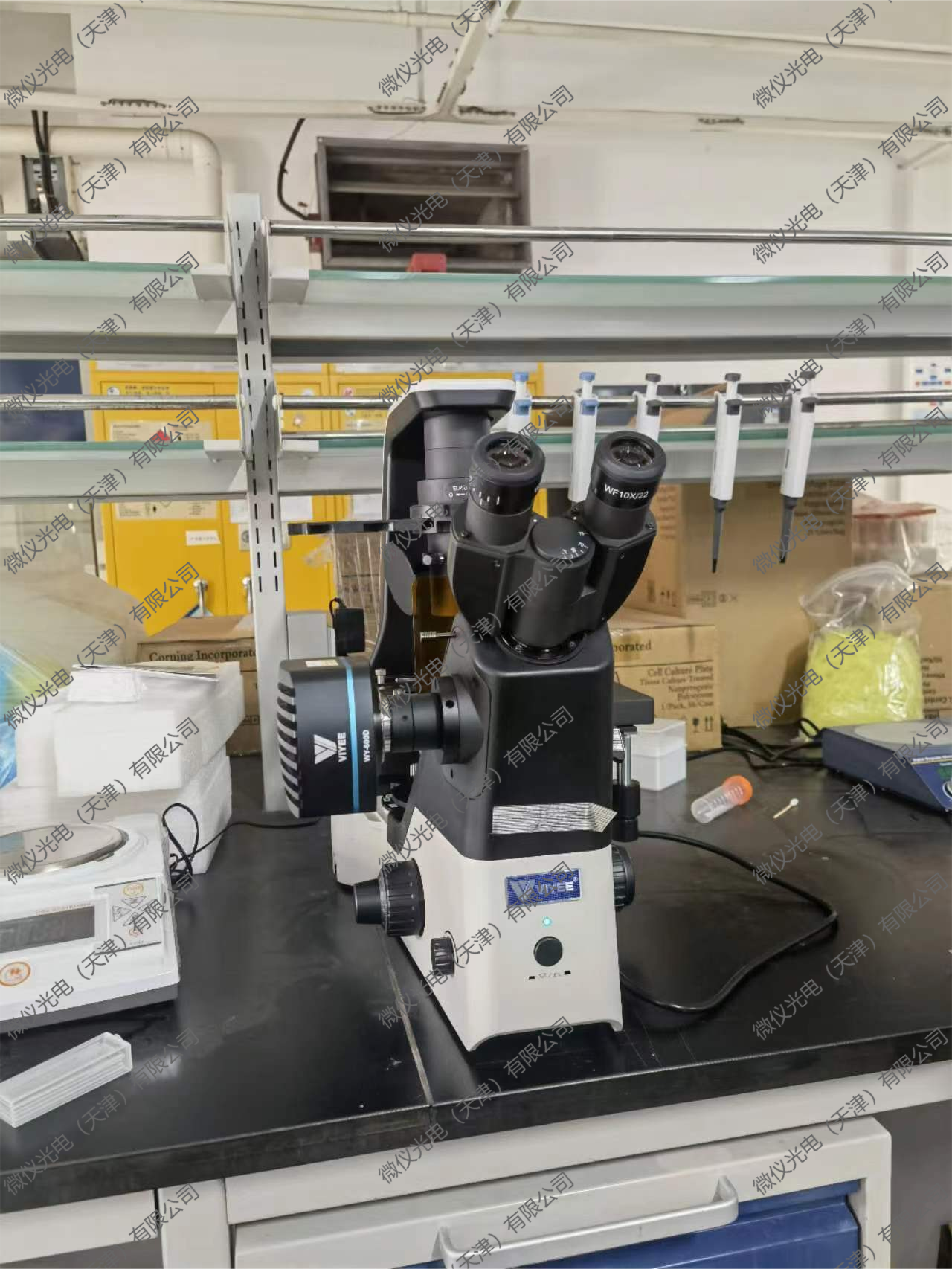
3. The mechanical mechanism is stable and reliable, with a novel appearance.
4. Uses long-life LED light sources and infinity optical systems to easily obtain high-definition, high-contrast, wide-field images. High-performance falling fluorescent LED lighting can be added. Fluorescence excitation B, G, and U excitation bands.
5. The compact and portable operation button layout allows for cell observation, sampling, and processing inside the ultra-clean table.
6. Replaceable filter lens sets offer more diverse and flexible dye selection. High-intensity and uniformly bright LED lighting supports high-quality fluorescence observation.
7. Equipped with a standard camera interface, paired with MicroInstrument's own factory cameras and supporting image processing software, it achieves high-sensitive, low-noise, high-definition images.
Since its founding in 1919, Nankai University has had a biology department. In 1922, Nankai University officially established the Department of Biology. In June 1993, based on the Department of Biology, the Institute of Molecular Biology was merged to form the School of Life Sciences. The school currently has departments of Microbiology, Biochemistry and Molecular Biology, Genetics and Cell Biology, Plant Biology and Ecology, and Animal Biology and Developmental Biology; It has established a national demonstration biological experimental teaching center, AIDS research center, tumor biology center, entomology research institute, and public experimental platforms. It serves as a national base for talent training in life sciences and technology, as well as a base for training basic science science talents.