The School of Life Science at Nankai University purchased Micro Instrument Optoelectronic Tricular Fluorescence Microscope SystemV2950-830S, used for fluorescence observation of cells stained by fluorescence.
Features of our V2950 Trinocular Fluorescence Microscope:
1. Equipped with a high-brightness LED (B, G, U) three-band integrated fluorescent module, ready for immediate use.
2. Transmitted lighting uses continuously adjustable LED lights with adjustable color temperature, allowing users to freely adjust the color temperature.
3. The entire machine is treated for mold prevention to protect the lens and extend the instrument's service life.
4. Compact and stable height-fixing rigid body, fully reflecting vibration protection requirements for micro-operations.
5. Equipped with long-distance phase contrast condensers and phase contrast objective lenses for bright-field and contrast observation.
6. The ultra-long-distance concentrating system allows for contamination-free cell observation of high-profile culture dishes.
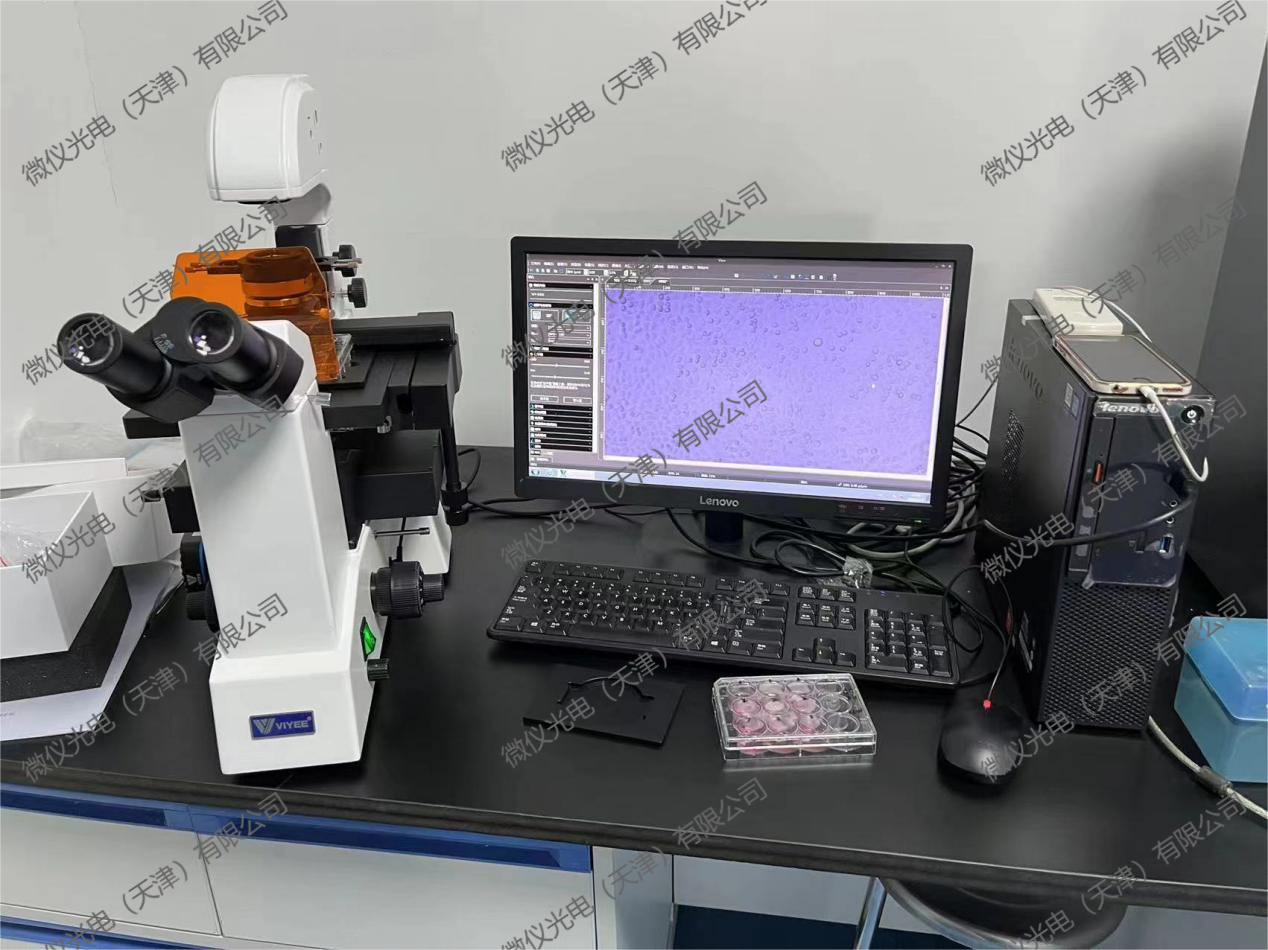
Since its founding in 1919, Nankai University has had a biology department. In 1922, Nankai University officially established the Department of Biology. In June 1993, based on the Department of Biology, the Institute of Molecular Biology was merged to form the School of Life Sciences. The school currently has departments of Microbiology, Biochemistry and Molecular Biology, Genetics and Cell Biology, Plant Biology and Ecology, and Animal Biology and Developmental Biology; It has established a national-level demonstration biological experimental teaching center, AIDS research center, tumor biology center, entomology research institute, and public experimental platforms. It is a national base for talent training in life sciences and technology, as well as a base for training basic science science talents.